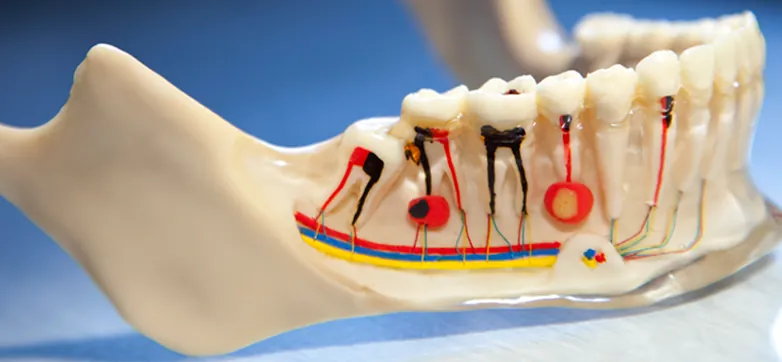
What Is Root Canal Treatment?
Root canal treatment is a type of endodontic care used to treat inflammation or infection inside a tooth. The soft tissue inside the tooth, called the pulp, can become affected by deep decay, a crack, trauma or previous dental treatment.
During treatment, the affected pulp is removed and the root canals are cleaned, shaped, filled and sealed. The goal is to address the condition while preserving the natural tooth whenever clinically possible.
Signs That May Require an Evaluation
An endodontic evaluation may be recommended for symptoms such as:
- Persistent or severe pain when chewing or biting
- Lingering sensitivity to hot or cold
- Swollen or tender gums near a tooth
- A pimple or recurring drainage on the gums
- A deeply decayed, chipped or cracked tooth
- Discoloration following an injury to a tooth
These symptoms can have different causes and do not automatically mean that root canal treatment is necessary. A dentist must examine the tooth before making a diagnosis.
Seek prompt professional care for facial swelling, fever or rapidly worsening symptoms. Difficulty breathing or swallowing requires urgent medical assistance.
What Happens During Root Canal Treatment?
- Evaluation: The provider examines the tooth and may take diagnostic X-rays.
- Anesthesia and isolation: Local anesthesia is commonly used, and the tooth may be isolated to keep the treatment area clean.
- Cleaning and shaping: The affected pulp is removed and the internal canals are carefully cleaned and prepared.
- Filling and sealing: The canals are filled and sealed to help prevent recontamination.
- Final restoration: A filling, crown or another restoration may be recommended to protect the treated tooth.
Treatment may require one or more appointments depending on the tooth, diagnosis, complexity and healing needs.
Comfort and Recovery
Local anesthesia is commonly used during root canal treatment. Individual experiences vary, and some patients may have temporary tenderness or sensitivity after the procedure.
Follow the personalized instructions provided by your dental professional. Contact the office if pain or swelling is severe, becomes worse or does not improve as expected.
Restoring the Tooth After Treatment
A root canal-treated tooth generally requires a permanent restoration. The appropriate restoration depends on the tooth’s location, remaining structure and bite. Avoid heavy chewing on the tooth until your provider confirms that it has been properly restored.
Learn more about South Dental’s restorative and prosthodontic care.
When May a Specialist Referral Be Recommended?
Referral to an endodontist may be appropriate for complex root anatomy, previous root canal treatment, persistent symptoms, dental trauma or procedures requiring specialized evaluation.
Depending on the diagnosis, complexity and provider availability, treatment may be completed at South Dental or referred to an appropriate specialist.
Request an Endodontic Evaluation
Contact South Dental to arrange an evaluation and determine whether root canal treatment, restorative care or another option may be appropriate.
.page-id-189 #menu-services-menu a { color: #47776c !important; }
.page-id-189 #menu-services-menu a:hover, .page-id-189 #menu-services-menu a:focus { color: #0b7f63 !important; }
.page-id-189 #textos .sd-service-detail { color: #333333; font-size: 16px; line-height: 1.75; }
.page-id-189 #textos .sd-service-detail h1 { margin: 0 0 20px; color: #0b7f63 !important; font-size: clamp(32px, 4vw, 46px); font-weight: 400; line-height: 1.15; }
.page-id-189 #textos .sd-service-detail h2 { margin: 32px 0 12px; padding: 0; color: #0b7f63 !important; font-size: 28px !important; font-weight: 500; line-height: 1.25; }
.page-id-189 #textos .sd-service-detail p, .page-id-189 #textos .sd-service-detail li { color: #333333 !important; font-size: 16px; line-height: 1.7; text-align: left; }
.page-id-189 #textos .sd-service-lead { font-size: 19px; line-height: 1.65; }
.page-id-189 #textos .sd-service-image { margin: 0 0 30px; }
.page-id-189 #textos .sd-service-image img { display: block; width: 100%; height: auto; box-sizing: border-box; border: 4px solid #a7ddd0; }
.page-id-189 #textos .sd-service-detail ul, .page-id-189 #textos .sd-service-detail ol { margin: 0 0 24px; padding-left: 23px; }
.page-id-189 #textos .sd-service-detail li { margin-bottom: 10px; }
.page-id-189 #textos .sd-service-detail a { color: #0b7f63; font-weight: 600; }
.page-id-189 #textos .sd-service-actions { display: flex; flex-wrap: wrap; gap: 12px; margin-top: 30px; }
.page-id-189 #textos .sd-service-actions a { display: inline-block; padding: 13px 20px; text-decoration: none !important; }
.page-id-189 #textos .sd-service-primary { background: #0b7f63; color: #ffffff !important; }
.page-id-189 #textos .sd-service-primary:hover, .page-id-189 #textos .sd-service-primary:focus { background: #08664f; }
.page-id-189 #textos .sd-service-secondary { border: 2px solid #0b7f63; background: #ffffff; color: #0b7f63 !important; }
@media (max-width: 640px) { .page-id-189 .panel-row-style-for-189-0 { margin-top: 24px !important; }
.page-id-189 #textos .sd-service-detail h1 { font-size: 32px; }
.page-id-189 #textos .sd-service-detail h2 { font-size: 25px !important; }
.page-id-189 #textos .sd-service-lead { font-size: 17px; }
.page-id-189 #textos .sd-service-actions { display: block; }
Root canal treatment — frequently asked questions
Does a root canal hurt?
Local anesthesia is commonly used. Some patients have temporary tenderness afterwards; your provider will explain how to manage it.
How many visits does a root canal need?
One or more appointments, depending on the tooth, the diagnosis and its complexity.
Will I need a crown afterwards?
A root canal-treated tooth generally needs a permanent restoration such as a filling or crown to protect it.
Is a root canal painful?
Root canals are performed with local anesthesia, and many patients say it feels similar to getting a filling. The treatment is meant to relieve the pain caused by the infection.
How many visits does a root canal take?
Many root canals are completed in one or two visits, depending on the tooth and the infection. A crown may be placed at a later appointment.
What if I don't treat an infected tooth?
An untreated infection can spread and may lead to losing the tooth. If you have tooth pain or swelling, contact your nearest office as soon as possible.
This page provides general information and is not a diagnosis. Treatment recommendations require an individual examination, and service availability may vary by location.